

2. What is Website Architecture and Why Does It Dictate SEO Success?
3. Flat vs. Deep Website Architecture: Which Structure Delivers Better SEO Results?
4. Flat Website Architecture vs. Deep Website Architecture
5. Why Flat Website Architecture Is the Preferred Choice
6. Core Components of a High-Performing SEO Website Architecture
Have you ever wondered why over 65% of the high-value pages on your corporate website generate absolutely zero organic search traffic, even after investing months into premium content and backlink campaigns?
It is one of the most frustrating dilemmas facing modern marketing decision-makers. You hire talented writers, commission thoroughly researched articles, and execute outreach strategies, yet your primary product pages remain stubbornly stuck on page three of Google.
The missing variable in most digital strategies is structural foundation. According to industry studies by Ahrefs, 90.6% of all web pages receive no organic traffic from Google, with poor indexability and disorganized URL hierarchies cited as primary structural culprits.
If your digital infrastructure resembles a sprawling, then both search engines and potential buyers will abandon it. The important question is how to build a powerful website architecture that maximizes search engine visibility and scales organic revenue seamlessly. Let’s find out.
Website architecture refers to how your site’s pages are structured, organized, and interlinked. For business executives, it is useful to conceptualize website architecture as the master architectural blueprint of a commercial building.
If the foundation is weak, adding layer upon layer of high-quality content cannot compensate for the underlying structural flaws. From a strategic business standpoint, website architecture serves two non-negotiable masters:
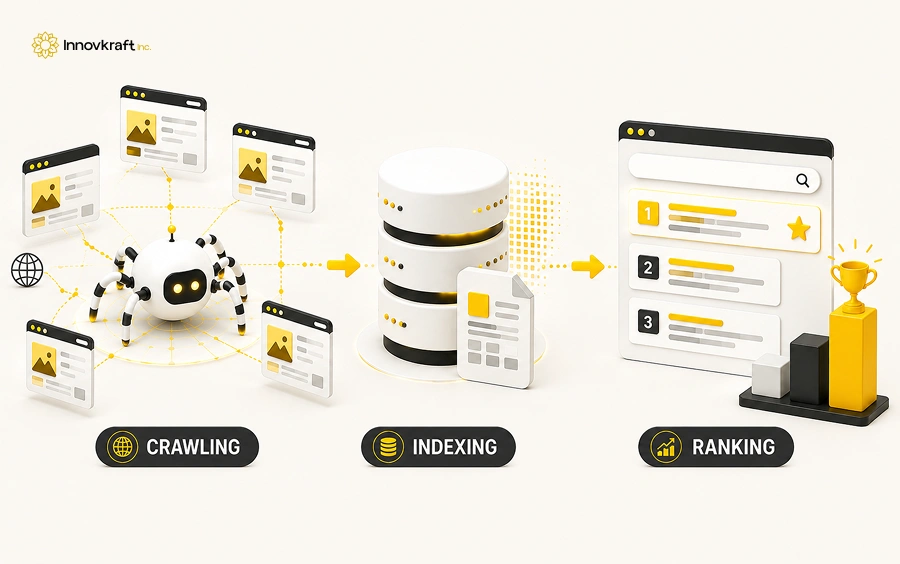
Search bots like Googlebot rely on links to navigate through your site. A clear hierarchy ensures bots discover every high-value page efficiently without wasting resources on duplicate or low-value URLs.
B2B decision-makers and buyers expect to find relevant solutions within two to three clicks. Logical navigation reduces bounce rates and guides users seamlessly toward high-intent conversion points.
Even research indicates that 88% of online consumers are less likely to return to a site after a bad user experience, while search engines actively deprioritize sites with high friction, slow discovery paths, and broken link flows.
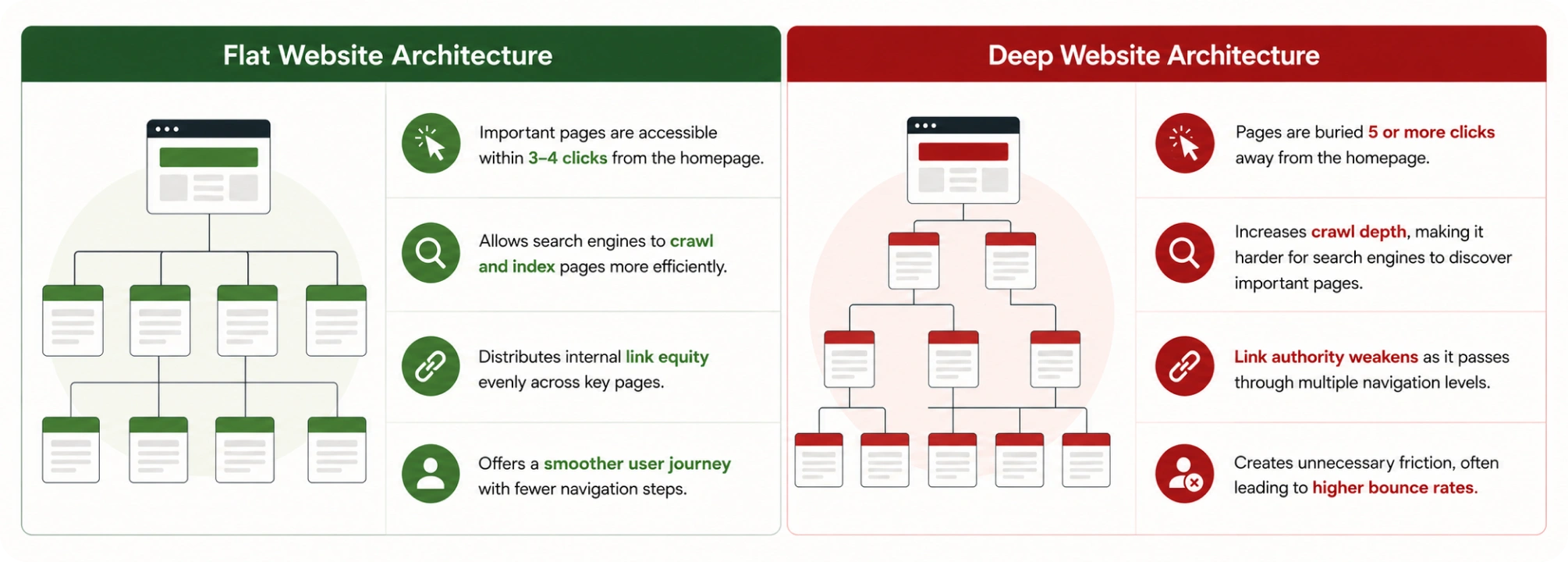
The way your website is structured directly impacts how easily users navigate your pages and how efficiently search engines crawl and index your content.
While both flat and deep website architectures have their place, a flatter hierarchy generally offers stronger SEO benefits by improving crawlability, internal link distribution, and user experience. Understanding the differences can help you build a website that ranks better and converts more visitors.

Your URL structure should clearly reflect your website hierarchy and give users an immediate understanding of what a page contains. Short, descriptive URLs are easier to remember, improve user trust, and provide valuable context to search engines.
For example, a URL like example.com/services/cloud-migration/ is far more meaningful than one filled with random numbers or unnecessary parameters. Keep URLs concise, use hyphens to separate words, include relevant keywords naturally, and avoid creating unnecessary folder levels.
Search engines now priorities topical authority over individual keyword-focused pages. Instead of creating isolated content, organize your website into topic clusters where one comprehensive pillar page is supported by multiple related articles. A strong topic cluster strategy helps you:
Over time, this structured approach builds topical authority, improves content discoverability, and creates a scalable foundation for sustainable organic growth.
Internal links connect your pages and guide both visitors and search engine crawlers through your website. Every important page should link to other relevant pages using descriptive anchor text that clearly explains the destination.
A blog discussing website architecture, for example, can naturally direct readers to related pages on technical SEO, website development, or SEO audit services. This improves content discoverability, distributes link authority across your website, and keeps visitors engaged for longer.

A well-organized website needs a strong technical foundation to ensure search engines can crawl, index, and understand your content efficiently. Elements like breadcrumbs, XML sitemaps, and crawl budget optimization play a crucial role, especially for large websites with hundreds or thousands of pages.
Here’s what every SEO-friendly website should include:
A technically sound website architecture not only improves search engine visibility but also creates a scalable foundation that supports long-term SEO growth and a seamless user experience.
A well-architected website is a strategic business asset that dictates how effectively your enterprise captures, nurtures, and converts organic demand. By eliminating crawl waste, establishing clear topical clusters, and maintaining an intuitive flat hierarchy, you pave a frictionless runway for both search engine algorithms and future customers.
Is your website’s structural debt holding back your organic visibility and revenue potential? Partner with Innovkraft, a premier SEO company in Bangalore known for delivering data-backed technical SEO architectures and custom digital marketing solutions.
Our team of technical architects and SEO strategists will conduct a comprehensive audit of your site hierarchy, eliminate crawl bottlenecks, and engineer a high-performing digital ecosystem designed for sustained market dominance.