
Every second, search engines process millions of queries by scanning billions of pages to deliver hyper-relevant results. Reaching your target audience through this automated pipeline requires aligning with how Google Search works.
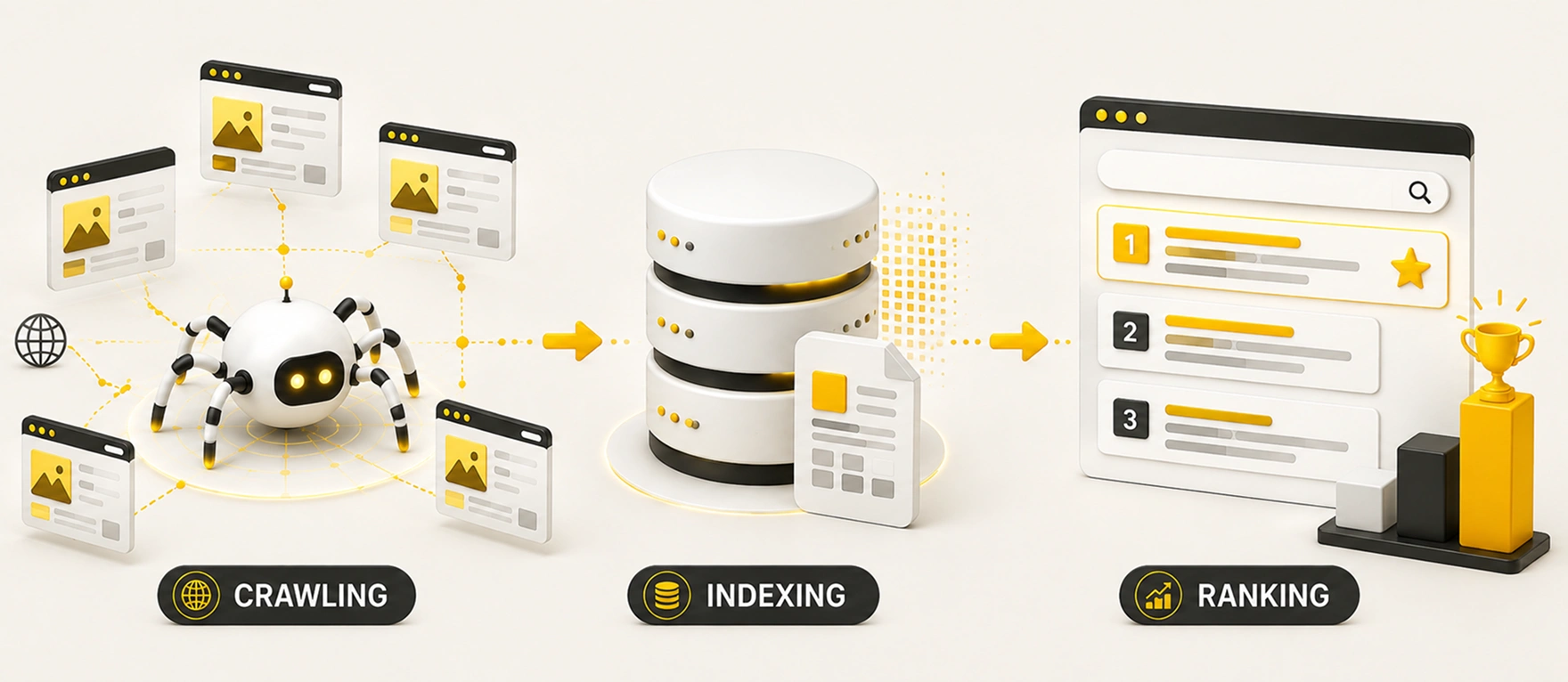
Excelling Search Engine Optimization (SEO) comes down to three core stages: Crawling (discovering pages via web spiders), Indexing (analyzing and storing that content in a massive database), and Ranking (evaluating hundreds of algorithmic signals to display the best answers). Here is what you need to know about each stage to start getting found online.
| Step | Process | Description |
|---|---|---|
| Step 1 | Crawl | Discover URLs |
| Step 2 | Index | Analyze & Store |
| Step 3 | Rank | Match & Display |
Crawling is the discovery process. Before a search engine can show your page to users, it has to know that your page exists.
Search engines send out automated software programs, commonly referred to as web crawlers, spiders, or bots (such as Googlebot). These bots continuously scour the internet to discover new and updated web pages.
Because the web lacks a centralized directory, crawlers address by following links.
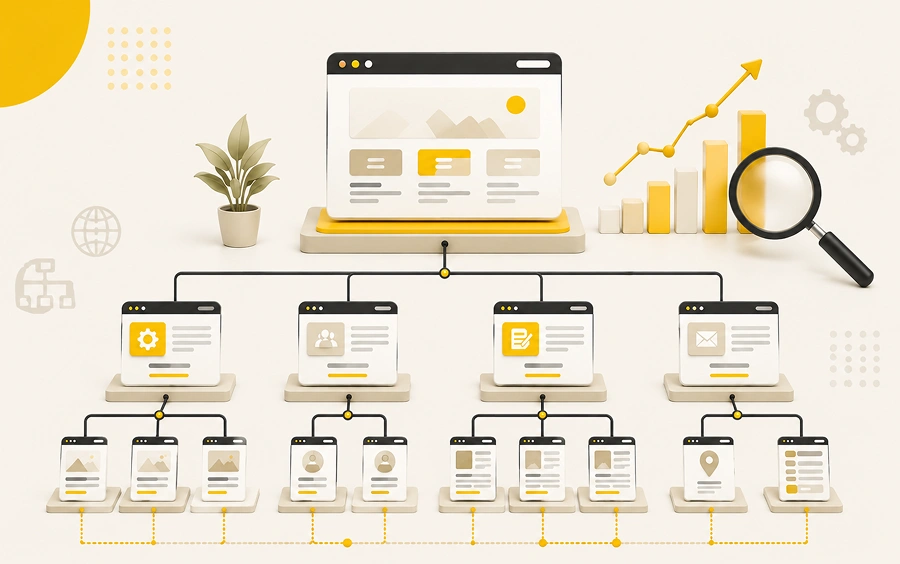
Imagine the internet as a massive transit network. Each web page is a train station, and hyperlinks are the railroad tracks connecting them. A crawler starts at a known page, extracts every hyperlink it finds, and adds those new destination URLs to a queue for future visits.
Crawlers discover new content primarily through:
Crawling requires immense server processing power. Search engines allocate a specific “crawl budget” to every website, determining how often and how deeply they scan your site.
Site owners manage crawler access through a robots.txt file. This file gives instructions to bots regarding which folders or pages they should not explore.
When working with a specialized SEO agency in Bangalore, technical audits often start by reviewing robots.txt to make sure search spiders are not blocked from critical content.
Once a crawler visits a page, it downloads the page content and passes it along for processing. This stage is called indexing.
If crawling is like gathering books from around the world, indexing is like organizing those books in a massive global library archive. The search engine analyzes the page content, text, images, videos, titles, meta tags, and overall structure.

During indexing, the search engine parses the code and text to construct an inverted index. Instead of reading every webpage from start to finish each time a user searches, the index operates like an index at the back of a textbook. It maps specific keywords to the exact web pages containing them.
Key factors processed during indexing include:
Not every crawled page makes it into the search index. Search engines enforce strict quality filters. If a page contains thin content, duplicate text, severe code errors, or a noindex tag, it will be skipped.
Partnering with an experienced SEO agency in Bangalore ensures that your metadata, structured data, and rendering paths are formatted properly so your pages earn a permanent spot in the index.
Ranking is the final stage, where search engines retrieve and order content to answer a user’s search query.
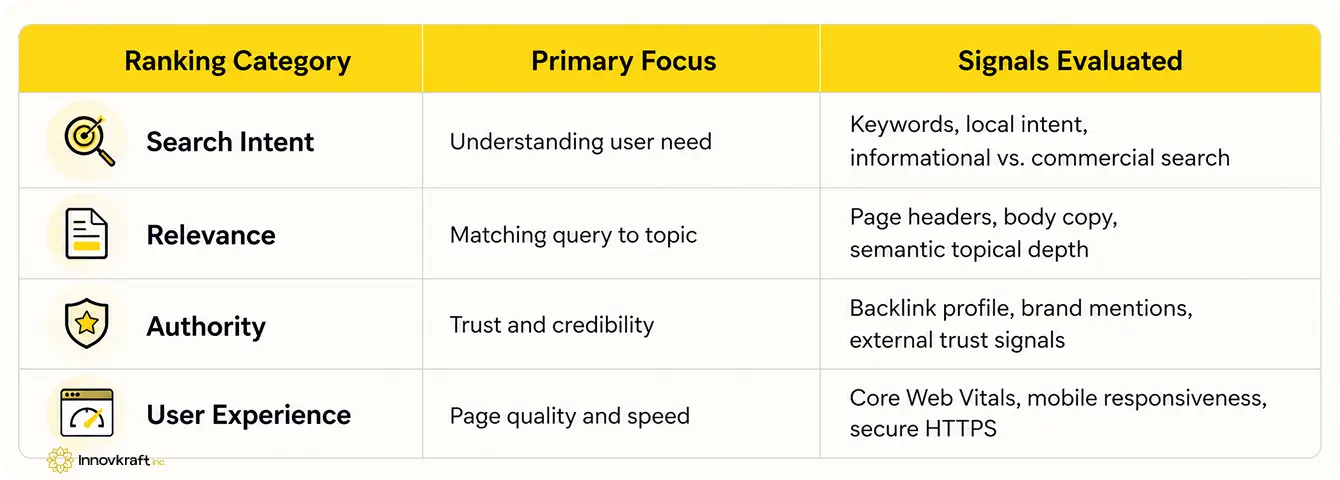
When a user submits a query, the search engine does not scan the live internet in real time. Instead, it searches its pre-compiled index, identifies every matching document, and uses sophisticated algorithms to rank those pages from top to bottom.
To visualize how crawling, indexing, and ranking interlock, consider a regional e-commerce store launching a new line of organic coffee beans.
SEO is not about trying to trick search engines. It is about making it easy for search bots to discover, understand, and value your content. If your site faces crawl errors or indexing blocks, no amount of keyword writing will help you rank. A comprehensive technical strategy ensures:
If you want your brand to dominate organic search results, partnering with an established SEO agency in Bangalore offers the technical expertise required to streamline your entire search pipeline.

Mastering SEO begins with respecting the search engine pipeline: Crawl, Index, and Rank. A website can only succeed if search engine bots can easily discover its pages, properly organize its content, and recognize its value to user searches.
By resolving technical roadblocks at each stage of this process, businesses can transform passive web pages into high-performing, revenue-generating assets that stand out in competitive search results.
Wondering where your site is getting stuck in the pipeline? Let Innovkraft help you diagnose your site’s technical bottlenecks and get your brand ranking where it belongs. Connect with our team today.