

2. Why Low Admission Enquiries Often Begin with Poor Online Visibility
3. SEO Helps Students Find Your Institution Organically
4. Your Website Is Often Your First Impression
5. Local SEO Brings Nearby Students to Your Campus
6. Content Marketing Builds Trust Before Students Contact You
7. SEO Generates Better Quality Leads Than Traditional Advertising
8.Student Reviews and Reputation Impact Rankings
9. Mobile SEO Matters More Than Ever
10. SEO Is a Long-Term Investment for Admission Growth
Every admission season, many educational institutions face the same frustrating question: “Why are we not getting enough admission enquiries even after offering quality education, experienced faculty, and good infrastructure?”
The truth is that students and parents no longer rely solely on word of mouth when searching for schools, colleges, universities, or training institutes.
Today, their journey begins on Google. If your institution does not appear on the first page of search results, you are silently losing potential admissions to competitors who have invested in SEO.
Search Engine Optimization, commonly known as SEO, has become one of the most practical and cost-effective ways for educational institutions to improve online visibility, attract genuine admission enquiries, and build long-term trust among students and parents.
Institutions that understand how students search online are now generating better-quality leads without depending entirely on expensive paid advertisements.
Many institutions believe their admissions problem is related to pricing, course quality, or competition. While those factors matter, poor online discoverability is often the real issue. Students today search using highly specific phrases such as “best engineering college in Bangalore,” “top MBA colleges with placements,” or “digital marketing course near me.”
If your institution’s website does not appear for these searches, your competitors automatically gain attention.
A HubSpot report found that websites ranking on the first page of Google receive more than 90% of total search traffic, while lower-ranking pages struggle to gain visibility.
For educational institutions, this directly affects admission enquiries, campus visits, and student trust.
Search Engine Optimization, commonly called SEO, improves your website’s visibility on Google when students search for relevant educational services or courses. Instead of relying solely on paid advertising that stops generating traffic once the budget ends, SEO creates long-term organic visibility.
For example, imagine you run a management institute in Chandigarh offering BBA and MBA courses. A properly optimized website can rank for searches like:
When students consistently discover your institution during these searches, admission enquiries naturally increase.
SEO works because it connects your institution directly with students already searching for educational opportunities.
Many educational institutions unknowingly lose enquiries because their websites are outdated, slow, or difficult to navigate. Imagine a student clicking your website and facing:
Most visitors leave within seconds. Google also evaluates website quality before deciding rankings. If your site performs poorly technically, your visibility decreases even further.
An SEO-optimized educational website focuses on:
For instance, a parent searching for “best private school with sports facilities” expects immediate access to admission details, infrastructure information, faculty credentials, and contact options. If your website makes this difficult, they simply move to another institution.
One of the most overlooked SEO strategies in education marketing is Local SEO.
Students frequently search using location-based phrases such as:
Google prioritizes institutions with strong local optimization for these searches.
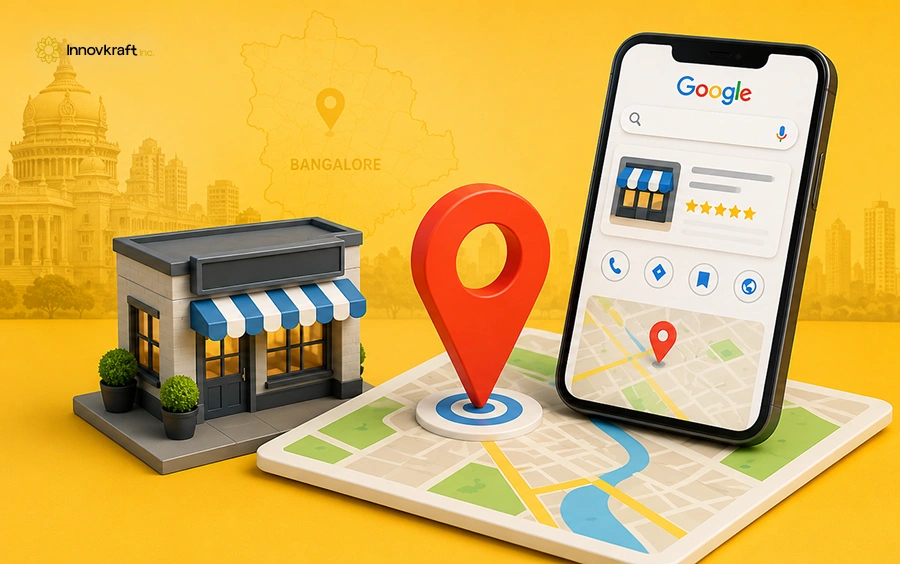
A properly optimized Google Business Profile, accurate location information, student reviews, and locally targeted website pages improve your institution’s chances of appearing in Google Maps and local search results.
For example, if someone searches “top commerce coaching classes in Amritsar,” Google usually displays map listings before websites. Institutions with strong local SEO receive significantly more calls and website visits from nearby students.
This strategy becomes especially important for schools, coaching centers, and regional colleges that depend heavily on local admissions.

Modern students and parents research extensively before making admission decisions. They want answers, career guidance, placement insights, and course comparisons.
This is where educational content becomes a major SEO advantage. Institutions that regularly publish valuable blogs and educational resources often rank higher on Google because search engines reward informative content.
For example, your institution can publish articles such as:
When students discover useful information on your website, they begin trusting your institution even before filling out an enquiry form. This strategy also positions your institution as an educational authority rather than just another campus advertising admissions.
Traditional advertisements often reach broad audiences, including people who may never become actual students.
SEO works differently because it targets users already searching with intent.
For instance, a student typing “best law college with placement support” is actively considering admission options. Ranking for such searches attracts highly relevant traffic that converts more effectively into enquiries.
This improves lead quality and reduces wasted marketing expenditure.
Many institutions spend heavily on newspaper advertisements during admission season, only to receive inconsistent responses. SEO creates continuous visibility throughout the year, helping institutions attract enquiries even outside peak admission periods.
Online reputation now directly affects admissions.
Students trust reviews because they reflect real experiences. Google also considers review quality and engagement when ranking educational institutions locally.
Encouraging satisfied students and parents to leave authentic Google reviews improves both visibility and credibility.
For example, if two colleges appear in search results and one has 4.8-star ratings with detailed student feedback, while the other has only a few reviews, most students naturally choose the more trusted institution.
SEO is no longer only about keywords. Reputation management plays an equally important role.

Most students now search for institutions using smartphones rather than desktops.
A mobile-friendly website is essential because Google uses mobile-first indexing, meaning it evaluates the mobile version of your site before rankings. If your institution’s website looks unprofessional on mobile devices, enquiry conversion rates can drop dramatically.
Good mobile SEO includes:
Imagine a student traveling on a bus while researching colleges on their phone. If your website loads slowly or displays broken formatting, that potential enquiry disappears instantly.
One of the biggest advantages of SEO is sustainability. Paid advertisements stop generating traffic once campaigns end, but SEO continues driving visibility for months or years when done correctly.
Educational institutions that consistently invest in SEO often see:
For example, a coaching institute ranking organically for “best IELTS coaching in India” can receive thousands of monthly visitors without paying for every click. This long-term visibility creates consistent admission opportunities year after year.
Many institutions attempt SEO without a proper strategy. Common mistakes include:
Effective educational SEO requires a balance of technical optimization, content strategy, local search visibility, and user experience improvement.
Institutions that treat SEO as a long-term growth strategy rather than a quick fix usually achieve the best results.

Low admission enquiries are not always caused by poor educational quality. In many cases, students simply cannot find your institution online because competitors dominate Google search results.
If your institution is struggling with low admission enquiries, weak Google visibility, or inconsistent website traffic, partnering with the right digital marketing team can make a measurable difference. At Innovkraft, we specialize in SEO strategies designed specifically to help educational institutions improve online visibility, attract quality student leads, and rank higher on Google search results.
We help schools, colleges, universities, and coaching institutes build stronger digital presence that converts website visitors into real admission enquiries.